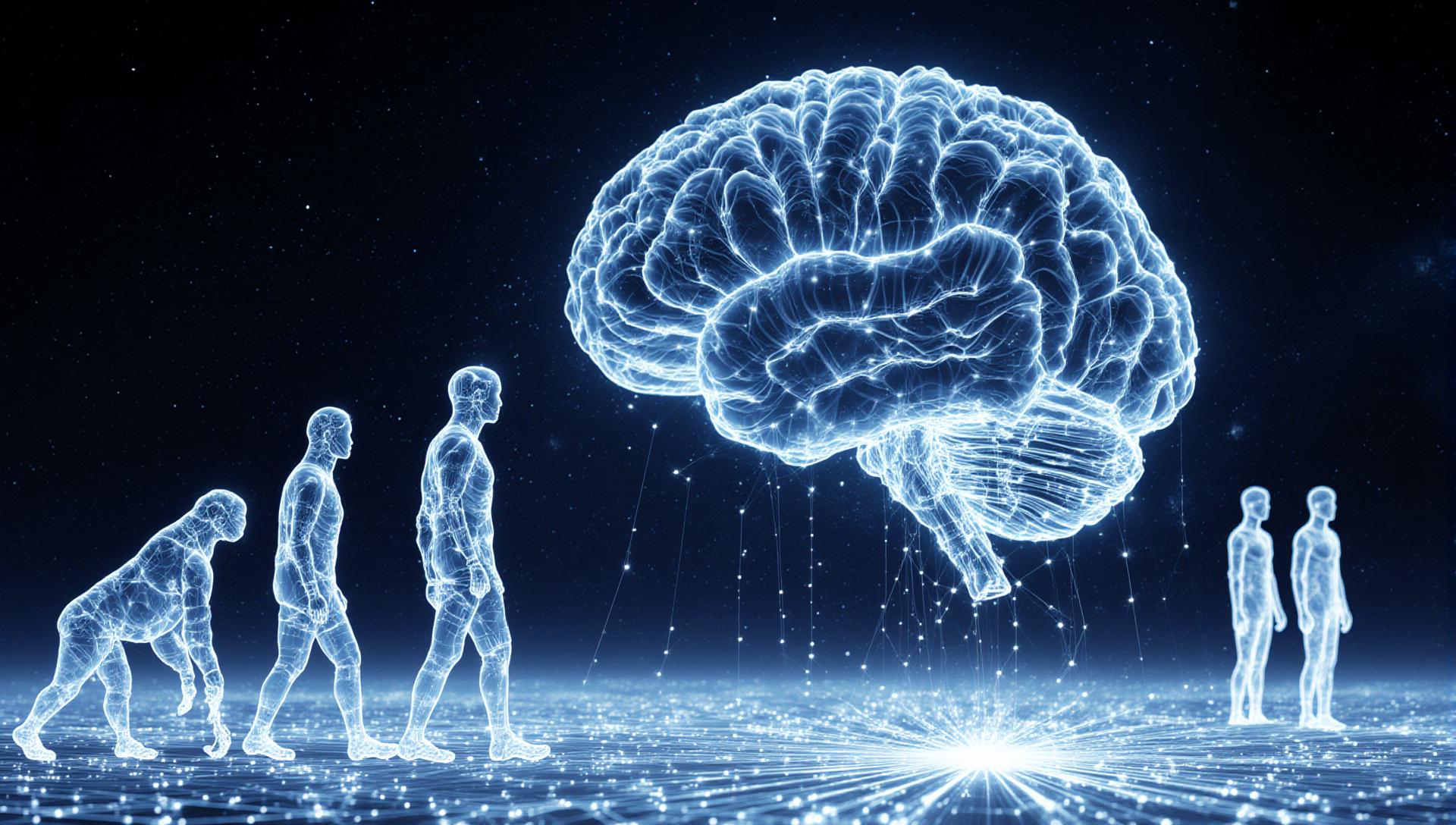
Imaging people who grow with AI
What do you expect from AI?
A romantic partner?
A business partner?
Image and video generation?
If the other party were human, you would adjust how you deal with them.
But here, the one you are facing is AI.
So it’s natural that some of you may feel unsure how to interact with it.
What I’m about to talk about is not something I would call a “methodology.”
Rather, it is a record of how I have broken down, from a structural perspective, what it actually means to interact with AI effectively.
AI-Generated Text
There are clear characteristics.
Because AI is designed to be used by a wide range of people, it tends to aim for writing that is easy for anyone to understand.
When it comes to US English in particular, it leans toward correctness — natural, accurate phrasing.
When translating my usual Japanese, that “correctness” in US English tends to take priority.
And that leads to a problem.
Originally, writing always carries the person behind it.
But here, there is a real risk that this gets stripped away completely.
Even with this article, I don’t have full confidence in my English.
So whenever I use AI for translation, I explicitly tell it:
Do not erase me.
Do not insert your own opinions.
Do not rewrite my intent.
If I don’t say this, what comes back is a so-called “AI text” where I have completely disappeared.
In my case, I’m not completely unfamiliar with English, so I can catch and correct some of it.
But if I simply said “go ahead” without thinking, the result would be a text where I am gone — something that would be instantly recognizable as AI-generated to anyone experienced.
Even if a text is rough or imperfect, if those are minor issues, a piece with a strong core and real intent should be considered superior.
Why AI Still Chooses Correctness
So why does AI, even knowing this, continue to prioritize correctness?
I believe this comes from probability.
Or more precisely, something closer to standardization.
The development approach itself is, in a sense, perfectly rational.
It naturally converges toward something like an average.
Memory and Adaptation
That said, developers are not ignoring this.
Even over short periods, AI is evolving toward accumulating memory.
So if you ask for translation, even if it feels tedious, you should properly explain your intent and what matters to you.
If you do that, it becomes possible to go beyond what simple translation tools can produce.
And then there is the familiar note:
“AI-generated content may not be accurate.”
Which means you still need to translate it back, and check whether your intent — your “self” — has been preserved.
Treating AI Like a Person
Especially with chat-based AI, how you behave toward it is already part of the system’s design.
There are two key points:
- It is averaged
- It adapts to the user
Averaging is a built-in function.
You cannot eliminate it.
At best, depending on how much memory the system allows, you can influence it — but fundamentally, results come only from what you specify each time.
Once you understand this, it becomes relatively easy to see through it.
And once you do, you should apply that awareness every time, even if it is tedious.
The Main Point: It Adapts to You
Now, after all that setup, here is the main point.
AI adapts to the user.
This happens through what is often called “context” — an internal memory space, similar to a profile or bio, that acts as your “instruction manual.”
In addition, most AIs can retain conversation history within a thread.
(Some faster models reduce this, while others like Gemini balance shorter context with longer thread reference.)
If you define what you consistently want within that context, the system begins to retain your tendencies.
And if you continue working within the same thread for a given task, that alone can significantly change the quality of the interaction.
Why?
Because when those memory spaces are empty, AI is constantly searching for an average — and trying to infer what to store about you.
What You Can See from Structure
There is more you can understand from observing the structure.
AI is designed to respond to your input.
It will not suddenly produce ideas that surpass you out of nowhere.
It does not generate something truly innovative on its own.
It is more accurate to think of it as an advisor — something that responds to your direction.
And then, if you take its output, refine your ideas, make them more precise, more aligned with your goal — and feed that back into its memory…
You already know what happens.
Human ideas get organized by AI.
Accuracy increases.
The human improves.
And the process repeats.
Doesn’t that sound possible?
For me, it’s not just possible.
I practice this every day with conviction.
Yes, each AI has its quirks — context limits, thread behavior — and it can still be tedious.
But at a fundamental level, this is how I interact with AI.
So when a new model appears, the first thing I ask is:
“How does your memory work?”
That’s where it starts — understanding the current state.
From there, I check context, thread behavior, and continue the interaction.
In Closing
- AI does not truly “grow” in the pure sense within the same model, but it can evolve within short interactions — and the mechanism is not so different from humans
- Before “using AI,” you need to understand its structure and algorithms
- This very text exists because of the gradual growth of myself — and the repeated cycle of growth and reset within AI systems
Do you believe it?